
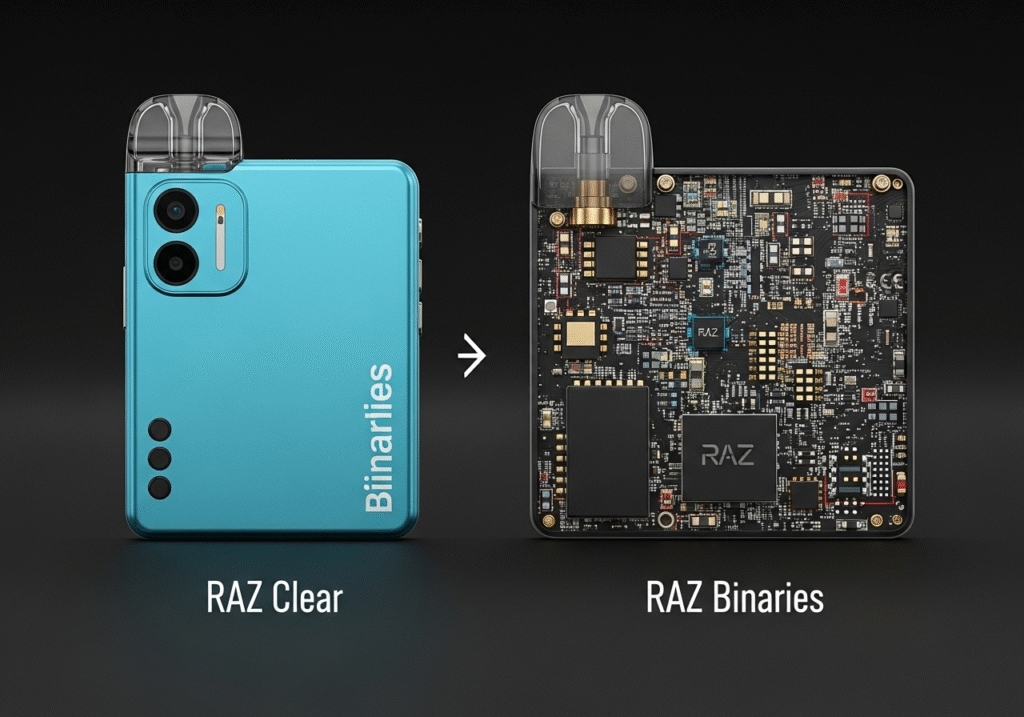
As an international buyer, you’re constantly navigating a confusing landscape of vape products. You see two lines from the same brand, like RAZ Clear and RAZ Binaries, and you’re forced to guess the difference. Is one a new technology? A different flavor? You worry that choosing wrong could be a costly mistake, resulting in a product your customers don’t want or, even worse, one that gets stuck in customs. This uncertainty makes every sourcing decision feel like a high-stakes gamble.
The solution is to look beyond flavor and tech specs and understand the manufacturing strategy. The primary difference between RAZ Clear and RAZ Binaries isn’t for the end-user’s palate; it’s for the importer’s peace of mind. These are often parallel product lines created specifically to navigate complex international regulations. "Clear" is engineered for markets with flavor bans, while "Binaries" may be a line for less-regulated regions. One isn’t better—they are built for different legal environments.
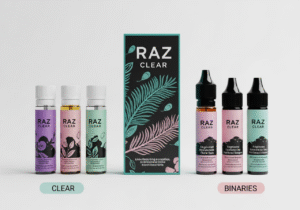
When I speak with purchasing managers like Matt, they often ask which product performs better. From my perspective as a manufacturer, the more important question is, "Which product is legal to import?" The real story here is not about user preference but about supply chain viability and de-risking market entry. This article will explain the logistical and regulatory thinking behind these product lines, so you can source our products with confidence, knowing you have the right one for your market. This inside knowledge is key to building a successful international vape business.
What exactly is the difference between RAZ Clear flavors and RAZ Binaries?
You need to place a large order, and you’re staring at two product lists: RAZ Clear and RAZ Binaries. The devices look similar, the puff counts might be identical, but the names are different. You wonder if "Binaries" is a new hardware platform or if "Clear" is just a simple menthol or unflavored option. Without clear information, you delay your order, worried you’ll choose the less popular or less advanced option, and miss out on sales.
The fundamental difference is their strategic purpose. RAZ Clear is typically a product line designed for compliance, using neutral naming and simplified profiles to navigate markets with strict flavor regulations. RAZ Binaries, on the other hand, often represents a standard product line with expressive flavor names and potentially different hardware or nicotine concentrations for less-regulated markets. It’s not about which is technologically superior; it’s about which one is legally admissible in a specific country. This separation is a tool for global logistics.
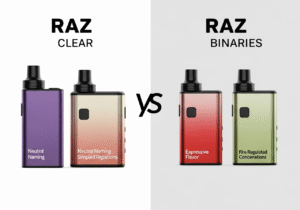
In my factory, we don’t think of these as competing products. We think of them as two different keys for two different locks. The goal is to ensure our partners, like you, can always unlock their market.
"Clear" as a Tool for Compliance
Many countries and states are cracking down on flavored vapes, specifically targeting names that might appeal to youth. Words like "Blueberry Blast" or "Tropical Mango" can get a shipment flagged and seized at customs. The "Clear" product line is our answer to this. The name itself is neutral. It suggests purity or simplicity, which is less likely to trigger regulatory scrutiny. The flavor inside might be a light mint or a completely unflavored base, but the most important feature is its name and packaging, designed to be compliant.
"Binaries" as a Regional or Standard Line
The "Binaries" name might be used for our standard, mainstream product in markets without strict flavor-name bans. It could denote a specific hardware series, a set of bold flavor profiles, or a nicotine strength popular in a certain region (like 5% in the U.S.). This is the line where we can be more expressive with branding and cater directly to consumer taste preferences without being constrained by heavy regulation.
It’s Not A/B Testing, It’s Risk Management
We didn’t create these two lines to see which one vapers prefer. We created them so that importers in restrictive markets have a product they can actually sell legally. For a business, a shipment of "Clear" that gets through customs is infinitely more valuable than a shipment of "Watermelon Ice" that gets seized and destroyed. It’s a pragmatic solution to a complex legal problem.
Strategic Product Line Comparison
| Feature | RAZ Clear | RAZ Binaries |
|---|---|---|
| Primary Purpose | Regulatory compliance; market access in restrictive regions | Standard offering; cater to consumer flavor preference |
| Target Market | Countries with flavor name bans or restrictions | Countries with open or less-regulated vape markets |
| Naming Convention | Neutral, simple (e.g., Clear, Pure, Mint) | Descriptive, expressive (e.g., Strawberry Kiwi, Blue Razz Ice) |
| Key Value Driver | Legal viability and prevention of seized shipments | Flavor variety, brand appeal, potential hardware features |
Can I use RAZ Pure Pods overseas and will the nicotine-strength/legality differ?
You’re ready to expand your business and import RAZ pods, but you’re staring at a wall of regulations. The UK has a 20mg/mL nicotine cap. Canada has flavor restrictions. The US has its own set of rules. You worry that if you order the wrong product—even by mistake—you could face fines, seizure of goods, and a major loss on your investment. This legal complexity makes you hesitant to place an international order at all.
Yes, you can absolutely use RAZ pods overseas, but you must order the specific version engineered for your country’s regulations. Nicotine strength and other features differ drastically between markets for legal reasons. For example, we manufacture a 20mg/mL (2%) nicotine version for the UK and EU to comply with TPD/TRPR laws, while offering a 50mg/mL (5%) version for the United States and other markets where it’s permitted. Ordering the correct regional SKU is essential for legality.
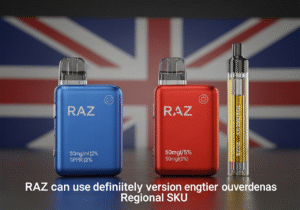
This is one of the most critical conversations I have with new international clients. A single number in the product description—2% vs 5%—can be the difference between a successful launch and a failed one.
The TPD/TRPR Rule: The 20mg Cap
In the European Union and the United Kingdom, the Tobacco Products Directive (TPD) and its UK equivalent (TRPR) set the maximum legal nicotine concentration for e-liquids at 20mg/mL, or 2%. They also limit tank/pod size to 2mL. Our RAZ pods destined for these markets are manufactured precisely to these specifications. Trying to import our 5% nicotine products into these regions will result in guaranteed seizure by customs.
The US Market: The 50mg Standard
In the United States, the market standard for disposable vapes is much higher, typically 50mg/mL (5%). This concentration became popular because it delivers a satisfying nicotine level for former smokers. Our standard RAZ pods for the US market are produced at this strength. Selling the 2% TPD version in the US would likely lead to poor sales, as consumers are accustomed to a stronger product.
Flavor Names and Regional Compliance
Beyond nicotine, there’s the issue of flavor naming. In a market like Canada, which has severe restrictions on flavor descriptions, a pod named "Tobacco" or "Mint" is legal, but "Raspberry Lemonade" is not. Our "Pure" or "Clear" series are often the designated SKUs for these markets. The pod technology is the same; the name and packaging are the tools for compliance.
Regional Pod System Legality
| Region | Nicotine Cap | Flavor Regulation | Recommended RAZ SKU |
|---|---|---|---|
| UK / EU | 20mg/mL (2%) | Strict (TPD/TRPR reporting required) | RAZ TPD-Compliant Pods (2% nicotine, 2mL capacity) |
| USA | No federal cap (5% is standard) | Flavor restrictions vary by state (PMTA process) | Standard RAZ Pods (5% nicotine) |
| Canada | 20mg/mL (2%) | Strict federal ban on "confectionery" flavor names | RAZ Clear or Mint/Tobacco SKUs (2% nicotine) |
| Australia | Prescription required | Nicotine vapes are prescription-only | Varies by patient prescription |
Do tech-savvy users prefer RAZ Clear or Binaries for pod compatibility and performance?
You cater to a customer base that knows their tech. They notice the small details—airflow, ramp-up time, and whether a pod system is part of a larger, cross-compatible ecosystem. When looking at RAZ Clear and RAZ Binaries, you wonder if one uses a more advanced chipset or a better coil that these discerning users would prefer. You want to stock the product that will earn the respect of these influential customers.
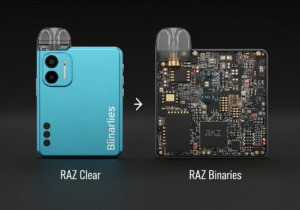
From a purely technical standpoint, tech-savvy users will find no significant performance difference between RAZ Clear and RAZ Binaries when the underlying hardware is the same. The choice between them isn’t driven by user preference for tech but by availability based on region. For example, if "Binaries" refers to a specific hardware platform with unique features, a tech user will prefer it for its performance. However, if "Clear" is simply a compliant version of that same hardware, the performance will be identical. Their preference is for the best available legal tech in their market.
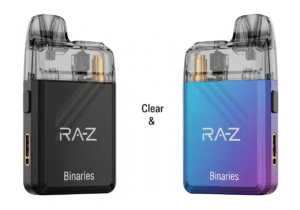
I find that the most tech-savvy buyers, like Matt, quickly grasp this concept. They stop asking "Which is better?" and start asking "What is the hardware platform for my region?"
Case 1: Identical Hardware, Different Branding
In many cases, a "Clear" pod is physically identical to its standard counterpart. It uses the same battery, the same coil, the same chipset, and the same housing. The only difference is the liquid’s flavor profile and the name printed on the outside. In this scenario, a tech user would perceive zero performance difference because there is none.
Case 2: "Binaries" as a Distinct Platform
Alternatively, "Binaries" could be the brand name for a unique pod system with its own proprietary features—perhaps a special coil technology or a wider range of compatible pods. In this situation, a tech-savvy user would naturally gravitate towards the Binaries ecosystem for its superior features or flexibility, if it is legally available to them. Their preference is for the technology itself, not the name.
Compatibility is Key
The ultimate goal for many experienced users is compatibility. They want to know if pods from one device will fit another. If "RAZ Binaries" represents an entire ecosystem of cross-compatible pods and devices, it will be highly attractive. But again, this appeal is moot if the system is not available or legal in their country. They will then default to the best-performing compliant option, which might be a standalone "Clear" disposable.
Performance vs. Availability Breakdown
| Factor | User Consideration | Manufacturer’s Reality |
|---|---|---|
| Performance | Do Clear and Binaries have the same coil and battery output? | Performance is identical if they are based on the same hardware chassis. |
| Pod Compatibility | Can I use a Binaries pod in a different RAZ device? | Compatibility is a feature of a hardware ecosystem, not a "flavor line." |
| User Preference | "I prefer the tech in the Binaries line." | This preference is only relevant if the Binaries line is legal in their market. |
| Final Choice | The most technologically advanced option. | The most technologically advanced option that is legally available. |
Which RAZ pod system offers better value and reliability for international shipping?
As a business owner, your definition of "value" goes beyond the unit price. It includes shipping costs, the risk of customs delays, and product reliability upon arrival. You need to know which RAZ system—Clear or another line—is the most robust and cost-effective choice for importing. A cheaper product that gets held up at the border or has a high failure rate is not good value at all.
For international shipping, the RAZ pod system offering the best value and reliability is always the one specifically designated for your target region. "Value" is defined by successful importation and market compliance. A "Clear" or other neutrally-named SKU provides the highest value for a market with flavor bans because it minimizes the risk of seizure, which is the costliest possible outcome. For less-regulated markets, value is tied to sourcing the standard, regionally-appropriate SKU that meets consumer demand for nicotine and flavor, ensuring a faster path to sale.
I always tell my clients that the most reliable product is the one that actually reaches your shelves. Reliability isn’t just about the device; it’s about the entire supply chain.
Value as Risk Mitigation
The biggest threat to value in international shipping is customs. A single mistake in a product’s description or nicotine level can lead to an entire container being rejected. The true value of our "Clear" line is not in its flavor, but in its role as an insurance policy against this risk in certain markets. By being compliant, it ensures your investment is protected.
Reliability in Manufacturing
From a physical reliability standpoint, all our RAZ products are manufactured to the same high-quality standards. Leakage rates, battery life, and device failure rates are consistent across all our product lines, whether it’s a "Clear" pod or a "Blue Razz Ice" pod. We do not have a lower-quality B-line. The reliability of the device you receive will be consistent regardless of the name on the box. The reliability of its journey, however, depends entirely on choosing the right SKU.
Shipping Costs and Weight
Shipping costs are primarily determined by weight and volume. As long as the physical devices are the same size and construction, there will be no difference in shipping costs between a "Clear" and a standard flavored version. The value is therefore not in saving a few cents on freight but in saving thousands of dollars by avoiding a seized shipment.
True Value Assessment for Importers
| Value Metric | Non-Compliant SKU (e.g., Wrong Nicotine/Flavor Name) | Compliant SKU (e.g., "Clear" or Regional Version) |
|---|---|---|
| Customs Risk | High risk of seizure, delays, or fines. | Low risk; designed to pass inspection. |
| Total Cost | Potentially infinite if shipment is lost. | Unit cost + shipping. |
| Time to Market[^1] | Unpredictable; can be delayed for weeks or months. | Predictable and fast. |
| Reliability | Supply chain is unreliable. Device reliability is irrelevant. | Supply chain is reliable. |
| Overall Value[^2] | Extremely poor. | Excellent. |
Conclusion
In the end, the comparison between RAZ Clear, Binaries, or any other product line is not a simple choice based on flavor or technology for the end-user. It is a strategic decision rooted in the complexities of global trade. As a manufacturer, our goal is to be a partner in your success. We create these distinct product lines not to confuse, but to provide you with a compliant, reliable, and valuable pathway into your specific market. By understanding that "Clear" is a key for regulatory locks and other lines are for more open doors, you can source with confidence, ensuring your products arrive safely and are ready for your customers.
Relate
[^1]: Understanding these factors can help streamline your processes and improve efficiency.
[^2]: Exploring this can enhance your decision-making and ensure you choose the best products.